 Join us for access to this video
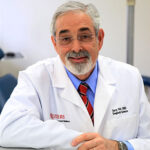
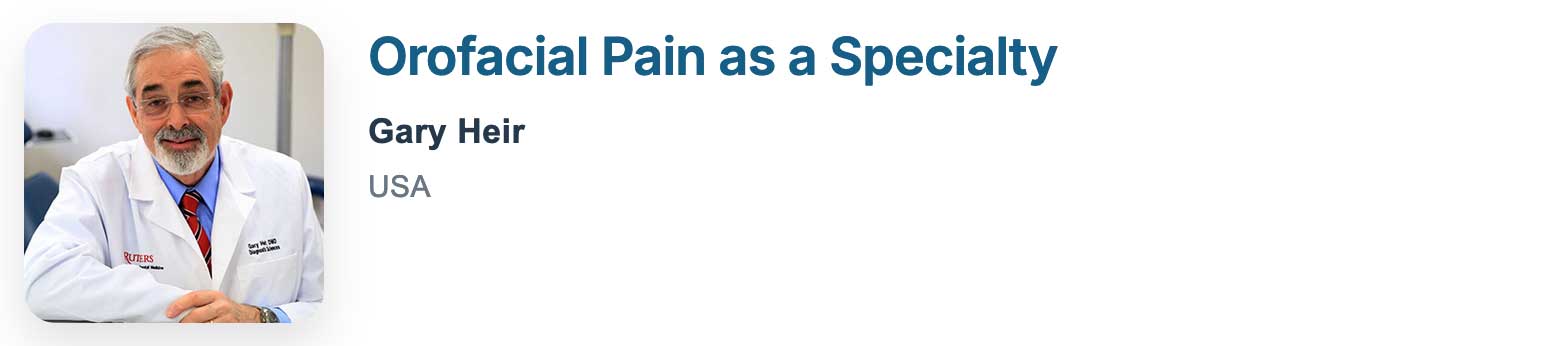
GARY M. HEIR, D.M.D.
Professor
Division, Program and Clinical Director
Robert and Susan Carmel Chair in Algesiology
Center for Temporomandibular Disorders and Orofacial Pain
Department of Diagnostic Science, Division of Orofacial Pain
Rutgers School of Dental Medicine
110 Bergen Street – Room D885
Newark, New Jersey 07101
heirgm@sdm.rutgers.edu
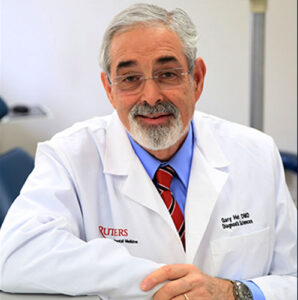 Dr. Heir is a Past-President and a Diplomate of the American Board of Orofacial Pain and Past President and a Fellow of the American Academy of Orofacial, He is a Fellow of the American College of Dentists. He holds the position of the Carmel Chair in Algesiology at the Rutgers School of Dental Medicine, the first professorship in the nation in algesiology dedicated to orofacial pain. New Jersey Monthly Magazine named him as a New Jersey Top Doctor for two consecutive years.
Dr. Heir is a Professor, Program and Clinical Director of the Center for Temporomandibular Disorders and Orofacial Pain of Rutgers University School of Dental Medicine and Director of the Post Graduate Advanced Education and Masters Programs. Dr. Heir is Past Chair of the Written Examination Council of the American Board of Orofacial Pain, served on the Commission on Dental Accreditation (CODA) as a member and Commissioner of the Review Committee and continues to serve as a CODA orofacial pain site inspector. He is a member of the Review Committee of Advanced Dental Education of the ADA Council of the Commission on Dental Education and Licensure (CDEL) and the Section Editor of the Orofacial Pain Neuroscience Section of The Journal of The American Dental Association. He serves on numerous editorial boards for many other peer reviewed journals.
Dr. Heir is a member of many professional organizations devoted to the study and diagnosis of pain disorders, has published numerous papers, chapters and abstracts on topics related with the field of temporomandibular disorders and orofacial pain. Dr. Heir was appointed to the New Jersey Governors Council for Lyme Disease and served for twelve years in that position, and one term as its vice chair. He is the primary author of the nationally accepted Post Graduate Core Curriculum in Orofacial Pain.